How to work safely with Clay

More Important than any hand building or decorating skill, is the need to keep safe when handling clays and glazes.
Whether you work from home, a community studio, in a workplace or for yourself, it is critical that you take responsibility for your own health and safety. The impact of poor practices can be severe.
In this brief post I will be covering the ways you can enjoy your Ceramic studio safely.
What can happen if clay is handled poorly?
All Clay contains ‘Free Crystalline Silica’ which can cause Silicosis, being a long term lung disease, scarring lung tissue and causing irreversible loss of breathing capacity.
Please note the phrase ‘irreversible’. A quick careless clean up is not worth the risk.
In this article by the ABC the Australian Ceramics Association CEO Debbie Pryor says "If a studio isn't kept dust free and ventilated, and masks aren't worn when mixing glazes and loading kilns, the risk of silicosis is a real danger for dedicated makers,"
How Silicosis is caused
A common cause of exposure to clay dust is using a dry clean up method.
As clay dust can stay in the air for up to 12 days, sweeping a pottery studio floor for example, is a high risk task.
In the work I do with the Sgraffito, tiny amounts of clay are carved out of the clay body, then dry quickly. When doing this, it is important that I only ever work on leather hard clay, and clean up in a way that minimises dust.
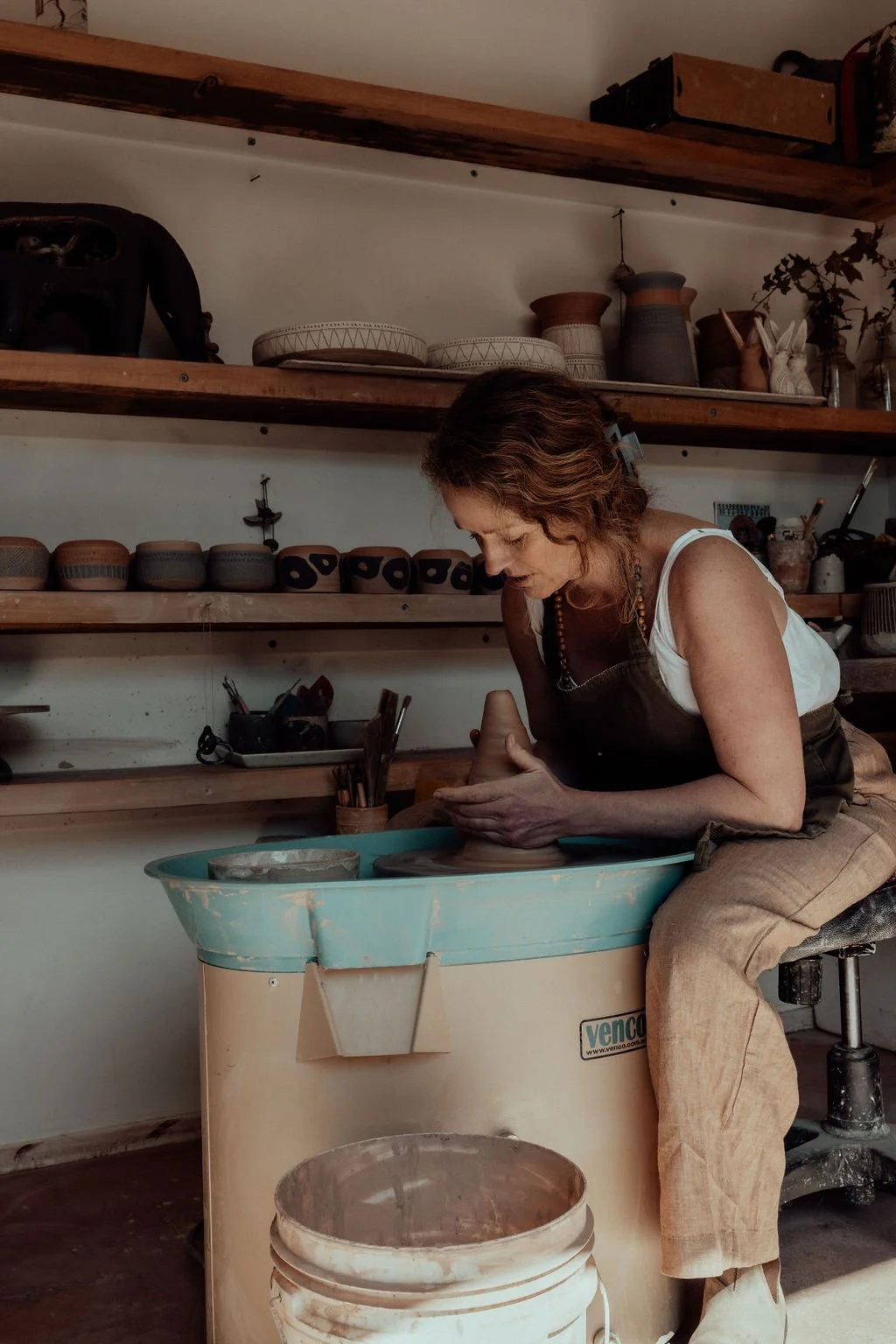
Another habit to minimise risk in my studio is to regularly (once per week on average) wash the floor and surfaces. If clay is left to build up in a fine layer (as it loves to do), any breezes or disruption by walking etc. can send breathable particles into the air. Over a long period of time, this can become dangerous.
Here is a helpful link for a guide on the Risks of Silica Dust.
How to mitigate this risk
Do not sweep or brush surfaces and floors
Use wet mops and sponges to clean surfaces regularly
Keep spaces as well ventilated as possible
Use a wet sanding tool if cleaning the base of pots
Give partially used clay bags a little spray with water before closing.
Work on newspaper when carving and bundle up safely for the bin.
Use a mask if in doubt
Mix dry glazes outside if possible, or in a well-ventilated space whilst masked
Is clay a safe medium?
When wet, clay poses no risk. Cleaning up safely is easy with wet sponges and mops, so there is no reason to take any unnecessary risks.
If you are looking to begin an exciting new hobby with clay, check out my post ‘How to Start making Ceramics at home’ for some great tips and explanations.
Just ensure that you clean up properly and enjoy yourself for the long term.