
Failure & Creativity: Why Making ‘Bad Art’ Leads to Innovation and Originality
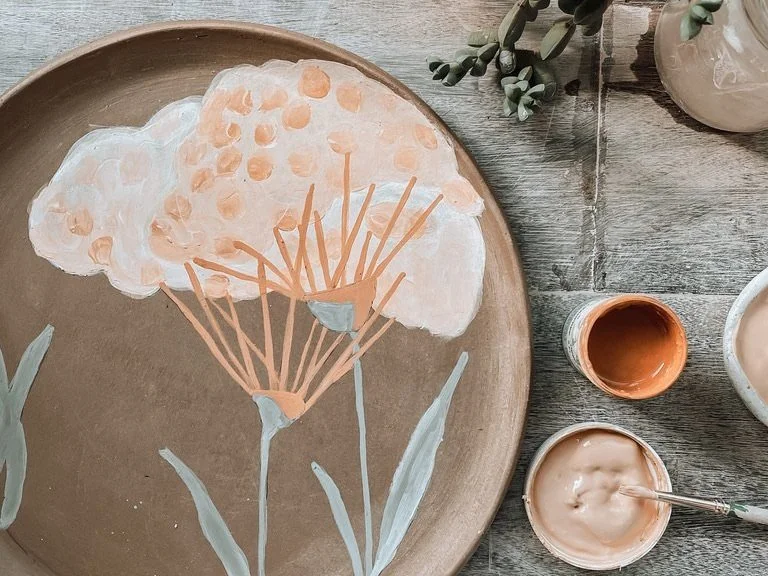
Failure & Creativity: Why Making ‘Bad Art’ Leads to Innovation and Originality
In a culture that values perfection and productivity, it’s easy to fear failure—especially in the creative process. But what if failure wasn’t the enemy of good art, but its most essential ingredient?
Every artist, from beginners to masters, create bad work. In fact, the willingness to make “bad” art seems to be a key part of the journey toward discovering original, powerful, and innovative ideas. Let’s explore the concept that failure isn’t just inevitable in the creative process— but vital.
In this post, I’ll be exploring the deep connection between failure and creativity. I’ll share insights from both my personal creative story, others who’ve walked this path before, and offer some practical suggestions for anyone new to embracing failure as part of their creative practice.
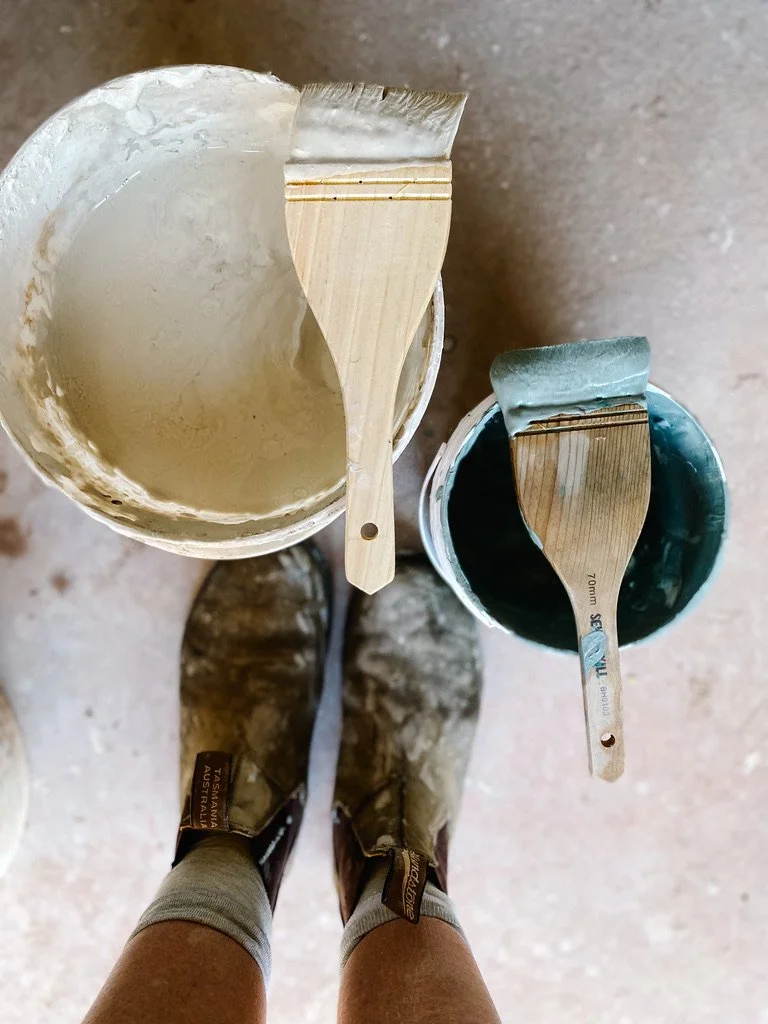
Testing New Mediums and New Colours in the Studio
When this Concept Became Crystal Clear for Me
During the first round of Ceramic workshops that I ran, I noticed something surprising: students were so focused on getting it right with their very first attempts at the Sgraffito technique, they were unintentionally sabotaging their own creative process. Even when I explained it—even when I tried to be bossy!—they couldn’t let go of the pressure to succeed.
In those early classes, I handed out a practice tile along with a series of playful instructions, encouraging students to explore the tools, get familiar with the materials, and simply have fun before moving on to their main decorative plate. But inevitably, they would each spend a long time perfecting that practice tile—despite my pleas not to worry about it—leaving themselves with just ten rushed minutes for their actual piece!
Now, I take a different approach. I still give out the practice tile, but I start with a simple instruction, then have everyone pass their tile to the person on their left, continuing the exercise collaboratively. I also let them know that my 10-year-old son will be happily slingshotting the tiles to bits later—so there’s absolutely no reason to get attached to the outcome! (This part is usually greeted with a mix of shock and laughter!)
The beauty of this approach is that students let go of attachment to the outcome and instead find freedom in exploration. It shifts the focus from making something perfect and instead allows them to stay present, learn the technique and enjoy the process. Adopting this mindset in any creative practice is essential—especially when we're developing ideas or striving to create work that feels interesting, original, or truly innovative.

One of my students during a beautiful ‘Wild Clay Workshop’
Why Does Failure Matter?
1. Aiming for Perfection Blocks Progress
The blank canvas can feel intimidating, like an insurmountable hurdle, with fear of making a mistake from the very beginning.
Simply making marks can often be enough to break the spell. It gets us moving forward. Every awkward sketch, every clumsy sculpture, every story that falls flat—it all teaches us something, but most importantly moves us away from atrophy.
When I started Ceramics and I was finding my way with brand new ideas, I would often open the door to a kiln full of failures. People would agonise for me and wonder how I could keep doing it! I remember feeling very clear. I had accepted in advance that failure was inevitable, so witnessing it was simply a step along my road. I reminded myself that my hands were still learning, and every technical failure was something I could puzzle out and build upon.
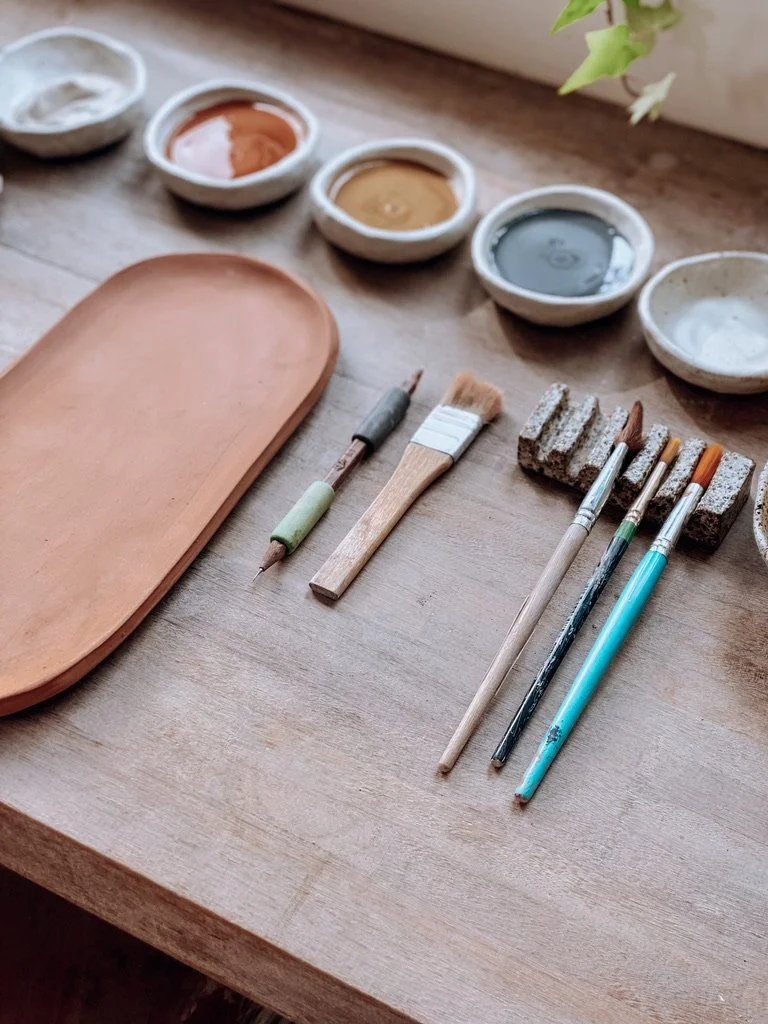
My Clay ‘Blank Canvas’
2. Failure Reveals Your Voice
Making mistakes helps you learn what doesn’t work. But more importantly, it helps reveal what feels true to you. Each creative misstep is like a signpost—guiding you back to your own instincts, tastes, and values.
The more art you make, the more you refine your inner compass. You begin to see patterns: the colours you return to, the textures you crave, the messages that matter to you.
3. Bad Art Is a Playground for Discovery
When you're not trying to impress, you give yourself permission to experiment. You try techniques you’re not “qualified” to use. You take risks. You play.
It’s in this raw, pressure-free space that breakthroughs happen.
When we aim for perfection, we are holding on tightly to a very particular outcome, and can miss the golden opportunities to see new things we hadn't expected.
Pushing clay too far might collapse a form—but it might also reveal a beautiful, unexpected texture. Scribbling without a plan might give you a line you couldn’t have made consciously. Innovation happens in the edges, and those edges are only reached through trial, error, and curiosity.
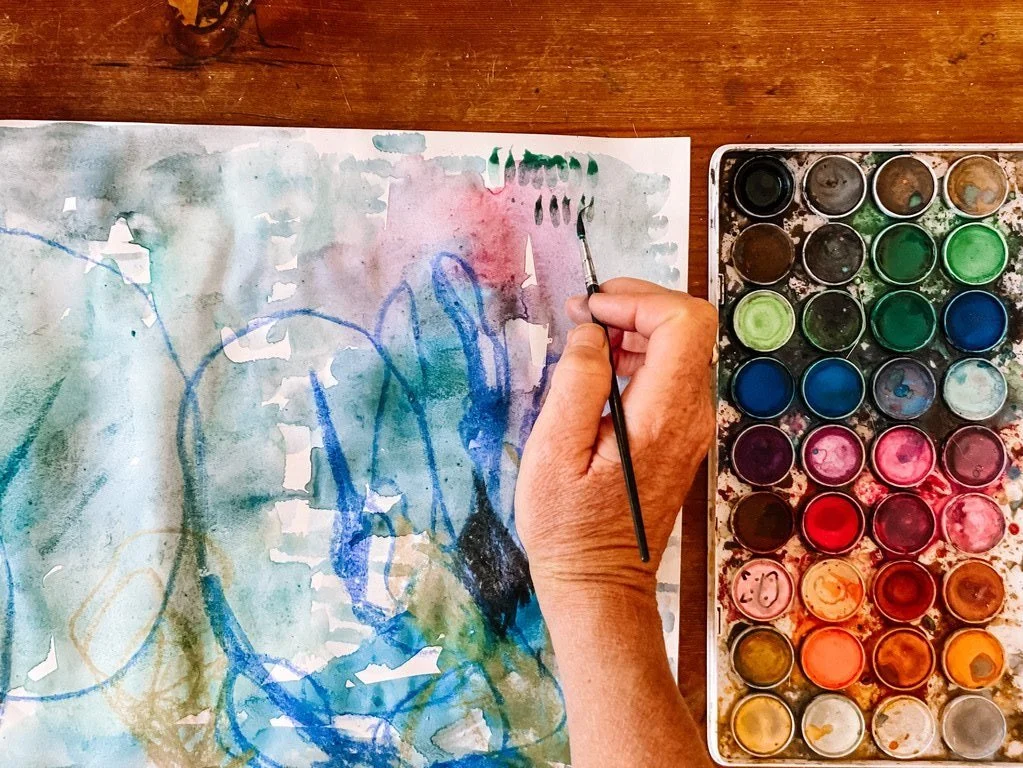
Playful Watercolour project involving mark making, deconstructing and reforming into gift cards.
4. Mastery Comes From Showing Up
As I understand it, the most celebrated creatives across history didn’t just make a few perfect pieces. They made a lot. Many of those works weren’t considered masterpieces—and some were straight-up failures.
Ira Glass said, "All of us who do creative work… we get into it because we have good taste. But there is this gap. For the first couple years you make stuff, it’s just not that good... It’s only by going through a volume of work that you will close that gap."
Maya Angelou admitted that not everything she wrote was brilliant, but the act of writing every day was non-negotiable.
David Bowie said, "If you feel safe in the area you're working in, you're not working in the right area. Always go a little further into the water than you feel you're capable of being in."
The more you create, the better you understand your medium—and the closer you get to something great.
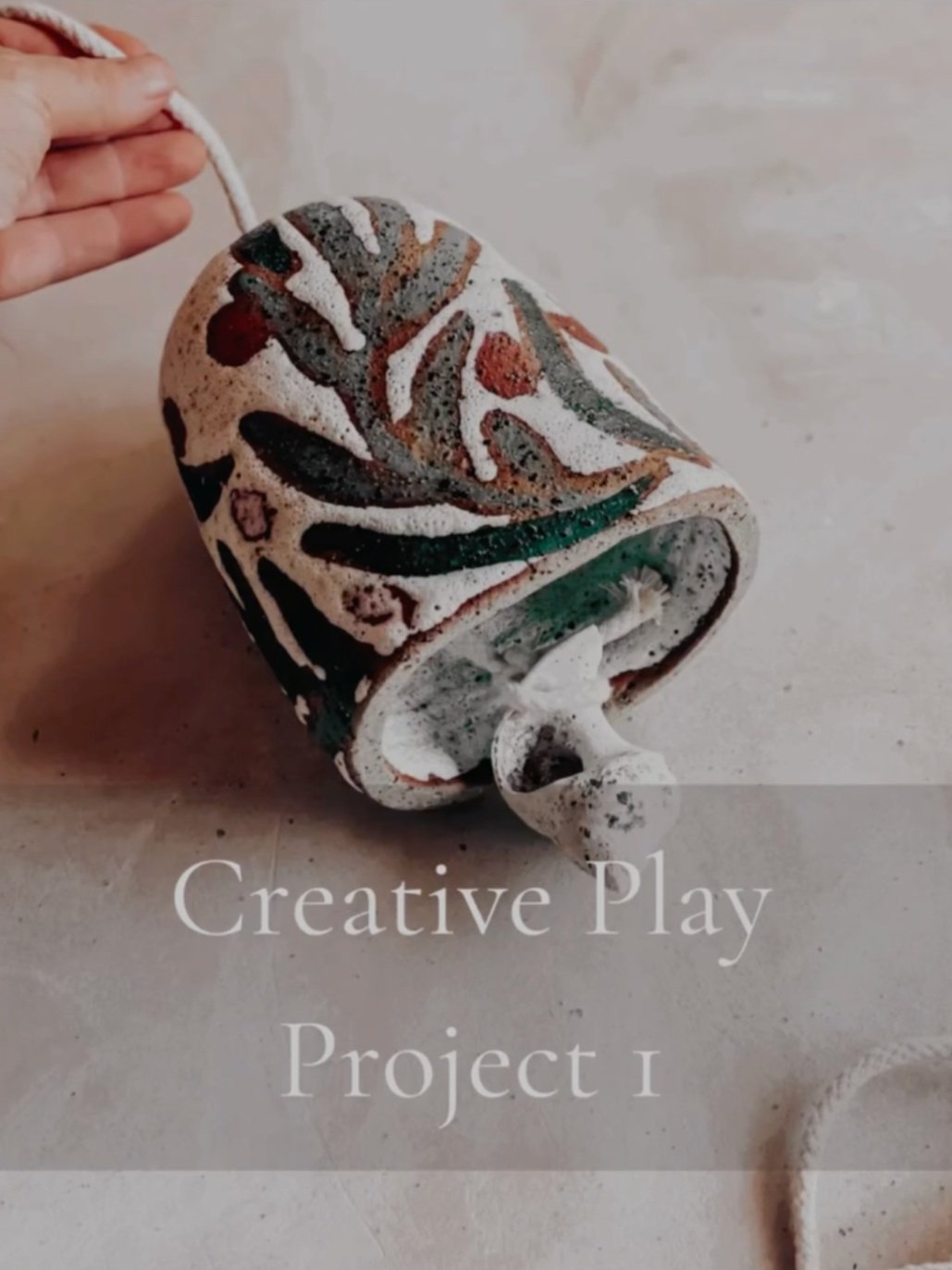
An Instagram Post from one of my Creative Play Projects which I filmed to share mixed-results ,play based ideas.
5. Failure Builds Resilience and Confidence
Facing creative failure and continuing anyway builds a kind of quiet confidence. You begin to realize that a failed project doesn’t mean you are a failure—it simply means you’re growing.
This resilience is powerful. It gives you the courage to keep trying, to share your work, and to take creative risks again and again.
6. Your Worst Work Might Be the Seed of Your Best
I really believe that continuing to show up and create, opens our mind to seeing our work in a new and interesting way. Even if you extract some tiny positive element from your creative work, it can be the momentum and inspiration for something wonderful.
I speak about this process in my ‘7 Steps to Creativity’ article, where it was this exact realisation which helped me break through my creative block and start following new rabbit holes of inspiration into the creative life I lead today.
I have definitely had some of my most important design breakthroughs by seeing mistakes as an opportunity to try something new on a whim.
Don’t get me wrong, many times this has become a piece for the seconds box, but many other times it has led to an exciting new design or even a new collection. The key was in being open to see mistakes as an opportunity to NEW doorways, rather than a slammed door on what I had planned.
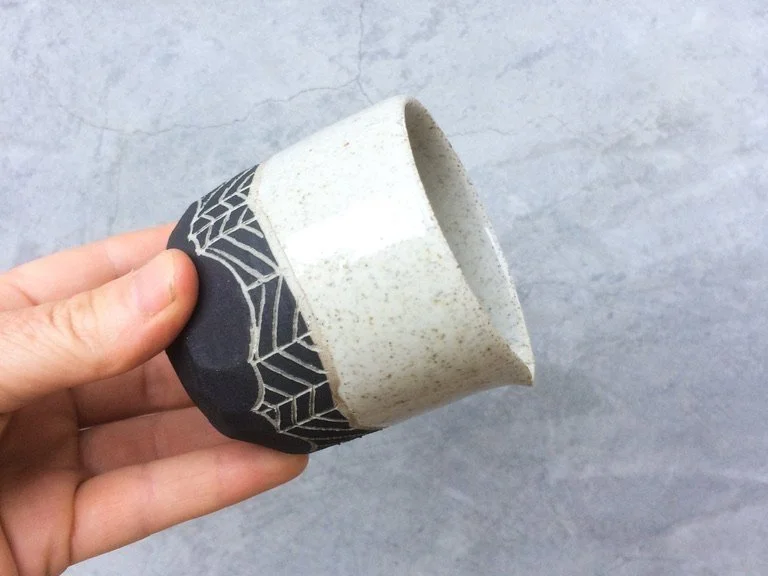
One of the pieces where a technical mistake (over drying the clay) led to a little breakthrough on design upon which I founded a popular new collection.
7. The Creative Process Is a Spiral, Not a Straight Line
I don’t think we improve in a linear way. You might circle back, dip down, loop around. Some days you’ll make magic, and some days you’ll make mud. This is normal.
By embracing failure as part of the spiral, rather than seeing it as a setback, you align yourself with the natural rhythm of creativity.
Showing up is still the most important thing. Avoid being too critical, and consider granting yourself license to have good and bad days.
Examples of Creative Failures
In another of my blog posts How I started my Creative Business in 4 Surprising Steps I discuss my own experience with the beautiful, scary, fast growing stage of developing my creative voice and my ceramic business. In this post I explain how I found that a certain ‘un-attachment’ was a vital factor to such a rapid growth of creative output and technical skill.
(If you would like a bit of fun, you can check out this account on Instagram called Ceramic_Casualties, because we have all been there!)
To further explore this fascinating topic, I have compiled 5 other references by creatives who I respect and enjoy listening to.
1. Elizabeth Gilbert – Big Magic: Creative Living Beyond Fear (Book)
In this bestselling book, Gilbert explores the emotional challenges of creative work, particularly fear of failure. She emphasises the value of making things just for the joy of it and letting go of perfection.
2. Ira Glass – “The Gap” (Video/Transcript)
This short, now iconic talk addresses the frustrating gap between your creative taste and your current ability. Glass emphasises the importance of making a lot of work—even bad work—to close that gap.
3. David Bayles & Ted Orland – Art & Fear: Observations on the Perils (and Rewards) of Artmaking (Book)
This book demystifies the fear of failure and perfectionism. It focuses on how art gets made—not by magic, but by ordinary people making lots of imperfect work.
🔍 Key Themes: Process over outcome, consistency, persistence in the face of doubt.
4. Brené Brown – The Call to Creativity (Podcast: Unlocking Us)
While not an artist per se, Brown’s insights on vulnerability and failure apply deeply to creatives. She talks about the courage to create imperfectly and how failure is necessary for growth and innovation.
“There is no innovation and creativity without failure. Period.”
🎧 Listen on Spotify or Apple Podcasts – “Brené on Creativity” episode
How to embrace failure in your creative process
Here are a few ideas on ways you might like to try integrating this concept into your own work.
Make something ugly on purpose. Give yourself full permission to make something bad. Then notice what you learn.
Celebrate experiments, not outcomes. Share your process with others, not just your highlights.
Actively participate in process art. Even if you are focused on developing skills in a particular medium, choose to try others regularly which have no productive output.

Process Art Comes in Many Forms! Playing here with frozen cornflour paint from memory?!
Remind yourself: it’s art, not heart surgery. The stakes aren’t life or death. Play!
Try something you don't have the skills for yet. Just for fun. In my experience, it seems that any creative practice at all seems to improve our creative thinking.

In this recent Instagram Post I am sharing my vulnerability in trying (and sharing!) something new.
Participate in a challenge. This is a great way of ‘showing up’ and making marks. I found my ‘60 Creatures in 60 days’ challenge hugely helpful in shaping my approach to my new love for sculpture. If you would like to follow that journey from a few years ago, you can check it out here.
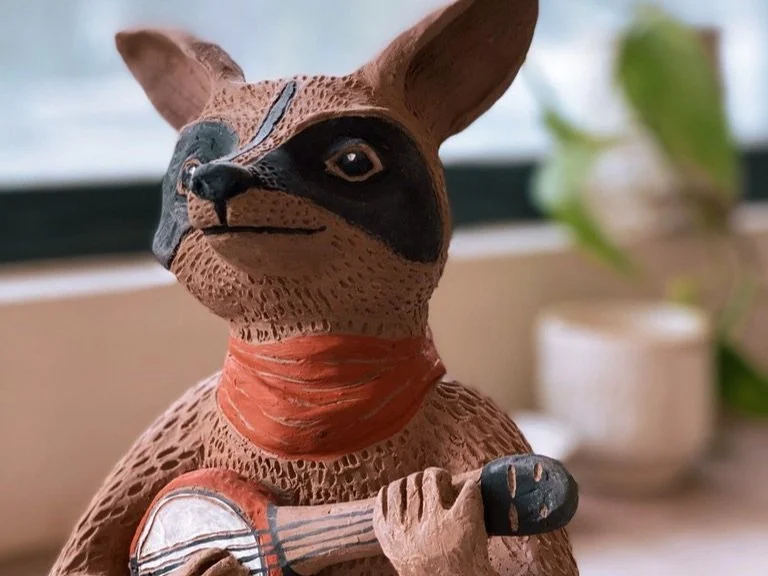
One of the Creatures from my #60Creatures60Days Challenge (Which incidentally broke when fired! You can check out the challenge on Instagram via this Day 1 Post .
Ephemeral art like sandcastles or nature mandalas. You know these will be washed away, so it is easy to find freedom in the process.
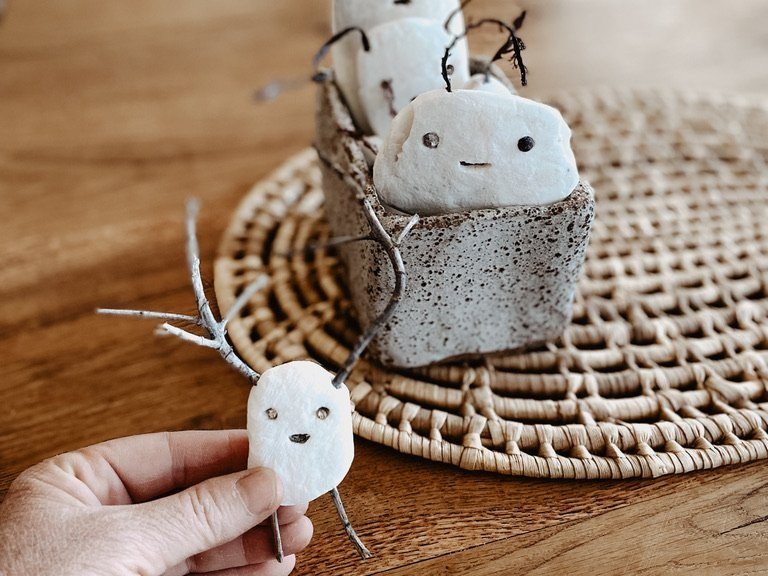
One of my favourite ‘ephemeral’ projects is to make little cuttlefish characters and leave them for others to find ;)
Painting on cardboard can be a great way to play creatively without attachment, as you can free yourself from ideas of waste or environmental damage. It might lead to the seed of something interesting, or it might end up in the compost, but either way you participated in a creative process.
Working in Small Batches. I love to work in groups of 3 or 4 when designing things like cups or cards, as it can give you freedom to explore a range of ideas, without expecting them to all be fantastic.

Playing on a theme to see what comes up over 3 different plates.
How do you know you’re getting it right?
An old friend of mine who many (many many) years ago, I used to play music with, would say that “As soon as you have forged the perfect formula, you know that you've become too comfortable”
If your creative work is commercial, it is possible that you need a degree of safety in manufacturing work which is consistent, or repeatable. I have some of this within my own ceramic business.
To generate new ideas or innovate new solutions however, you need to be braving uncertainty and expecting that things will not always work out.
This will obviously look different for everyone, though in my Ceramic Studio I usually TRY embrace mistakes, use failures and let go of complete productivity in the following ways;
If I have become disappointed with results from a batch of work, I will look for my mistakes, try to extract the learning that can be achieved. Any Ceramicist knows that this is par for the course, so you have to get your head around it quite early if you want to improve!
If I have over dried a batch of clay bodies or have some which are not up to scratch for my commercial work, I will often remove myself from an intellectual response to the piece and instead respond intuitively. Without overthinking it, I may be really fluid in my design approach, bold with colour or try doing another part of the process in a whole new way. Without EXPECTING it to work…just to see what happens.
When making a larger batch of work I will usually reserve 10-20% to try out or extend design concepts. These are always the pieces I most look forward to seeing fired and give me the most joy. They are playful, unknown, and uncertain of success.
All this said, please know that sometimes disappointment and frustration can become overwhelming; that too perhaps is a part of the creative process.
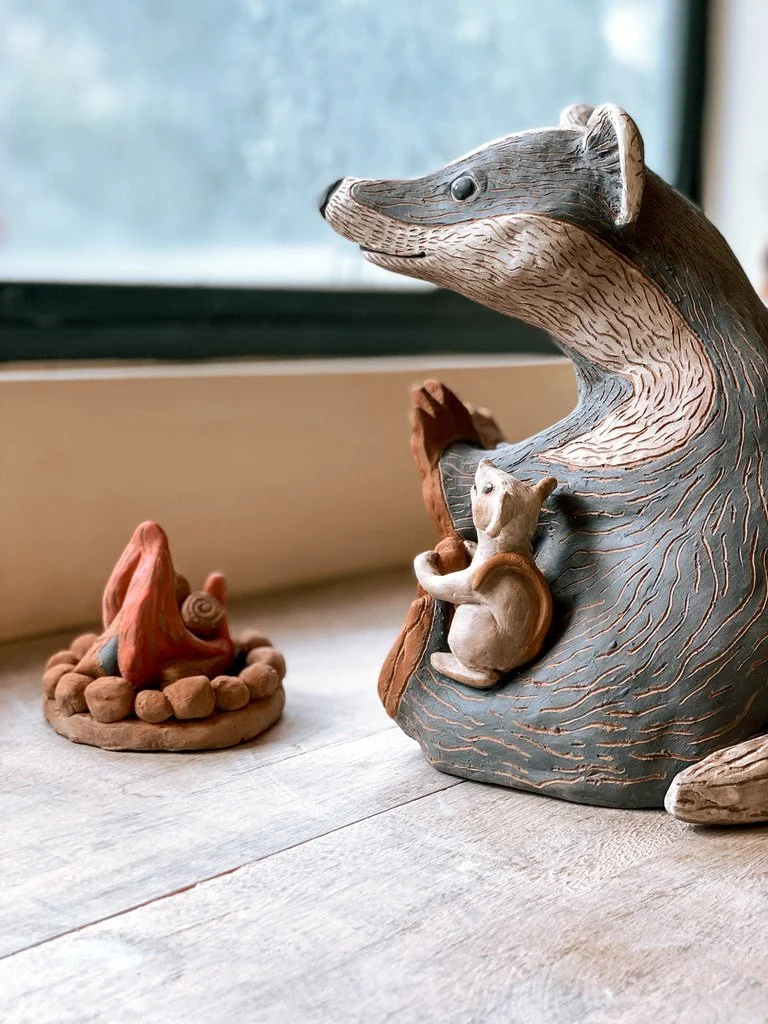
The huge joy of course, is that sometimes you feel like you got it right. I always loved the energy of this pair.
Final Thoughts
In closing this post, I want to acknowledge that for many people, ‘unproductive play’ or time spent on art which ends up being a disappointment, can feel disheartening and a waste of time.
I invite you to reframe this experience as a necessary part of the creative experience, which I believe ALL successful creators need to go through.
Try to hold your attachment to outcome lightly, and in doing so, cultivate a space where creativity can thrive.
Further Resources and Guides
If you would like to learn Ceramics in an environment where play and lightness is celebrated, please consider exploring my range of River Ceramics Online Courses, join me for a local workshop in Margaret River, Western Australia, or experience the ultimate creative indulgence with one of the upcoming Creative Clay Retreats
Please subscribe for more informative posts, freebies and course updates, or head to my Online Course Website to see if the self paced learning option might be for you.
For inspiration you can find regular updates, reels and posts on my Instagram page.
Best of luck for your Creative Experience!
Jolene Hewison
River Ceramics
